Why Does Time Fly So Fast?
Your calendar says a lot happened. Your memory is less certain. Here is why routine and constant busyness make time feel fast, and how to create more moments that stay with you.
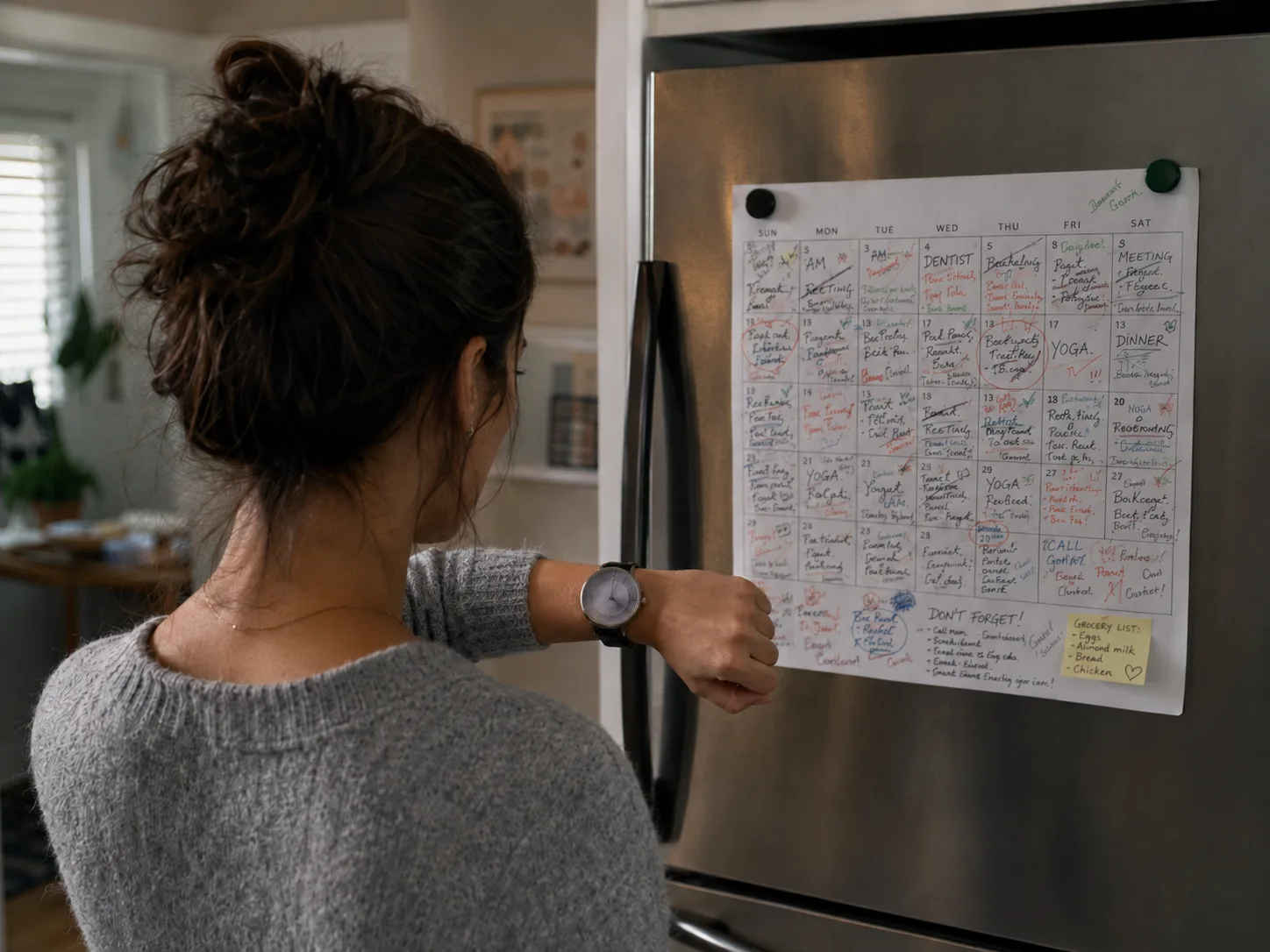
January starts. You answer messages at work, finish some household chores, travel somewhere, attend a few events, and suddenly everyone around you is discussing autumn.
Your calendar says a lot happened. Your memory says there was work, some errands, and perhaps one good Saturday.
So why does time feel as if it is moving so fast? And how can you make more of it stick?
There is no single explanation. Time perception is influenced by attention, emotion, memory, novelty, routine, and how rushed we feel.
But one idea is especially useful:
Time often feels short in retrospect when too few distinct moments remain in memory.
The clock did not move faster. The weeks simply left too few landmarks behind.
Time can feel fast in different ways
A week, month, or year seems to have disappeared. You know you were busy, but when you look back, the details are missing.
A day can feel long while you are living it and short when you remember it. That difference matters because the second experience is closely connected to memory.
Routine makes weeks easy to compress
Routine is useful. It saves us from making every small decision from scratch and helps daily life run more smoothly.
The problem begins when too many days share the same shape. You wake up, deal with work, travel or move between rooms, handle practical tasks, look at a screen, and go to bed. The next day contains a slightly different version of the same sequence.
A routine week may contain hundreds of actions, but memory can compress them into a few broad labels:
Work. Home. Admin. Weekend.
When very little stands out, the whole period becomes harder to separate into distinct moments. This does not mean every day needs to be extraordinary.
It simply means Tuesday needs one reason not to be mistaken for Thursday.
Invisible work leaves few natural milestones
Some kinds of work produce a result you can touch: the shelf is installed, the bread exists, the garden looks different, or the broken object works again.
Other work is less visible. You improve a process, answer questions, edit a document, solve a problem, move a project forward, or make a decision that may only show results months later.
The work can be valuable and still feel strangely unfinished. You spend the day doing things, but the room looks exactly the same when you stop. There is no clear boundary between before and after.
Visible results create memory markers.
A repaired button, cooked meal, cleared surface, finished drawing, or planted pot gives the day a small ending.
The result does not need to be impressive. It only needs to exist.
Screen time steals the pauses that help life register
The phone is not automatically the enemy. It is a camera, calendar, diary, map, and a direct line to people you care about.
It is also very good at filling every quiet transition.
We open our phones while waiting for someone, walking somewhere alone, standing at a party where we do not know anyone, or waiting for a meal to cook.
Those small pauses could help the day settle into memory. Instead, they are often replaced by unrelated information.
The problem is not only screen time. The problem is what the screen replaces.
It may replace noticing, reflection, boredom, or calling the person you actually miss. In return, it gives you reels, shorts, and other content that you may not remember five minutes later, never mind at the end of the year.
The answer is not to reject the phone.
The answer is to use your phone to create and retrieve memories, not only to consume more input.
Make it a tool that helps life stick.
How to make time feel less like a blur
You cannot slow clock time. You can create more distinct moments and make them easier to remember.
The goal is simple:
Notice more. Finish small things. Keep a record of what mattered.
1. Create one memory marker each day or week
Choose one thing that makes the day or week feel different.
Cook something new, take a different walk, visit someone, repair an object, read somewhere unfamiliar, or spend time making something with your hands.
That is enough.
At the end of the day or week, ask:
What made this period different from the one before it?
When the answer is specific, the memory has a marker.
For a small activity with a clear result, pick a Done IRL mission.
2. Call someone and have a real conversation
Messages are useful, but they rarely create the same memory as an actual conversation.
Call one person.
Ask what has really happened since you last spoke. Tell them something real in return. Stay long enough for the conversation to move past quick updates.
Talking helps us organise experience. It gives events meaning, and the conversation becomes a memory of its own.
Scheduling the call is allowed. Important things often happen because we make space for them.
3. Take photos deliberately, then review them
Taking many photos does not automatically mean you will remember more.
Take a few that capture where you were, who was there, or one detail you want to keep. Then return to them.
At the end of the week, choose a small number of favourites. Add them to an album. Delete the copies that show the same moment six times.
Old photo albums remain popular because they turn separate images into a story.
Your camera roll contains evidence. A selected album contains memory.
4. Put memories in your calendar
Most calendars are excellent records of obligations and poor records of life.
Add meaningful events after they happen. It can be as simple as:
Long walk in the rain.
Dinner with Lea.
Finished fixing the chair.
Quiet day at home.
Add one sentence or attach a photo.
When you look back, the month will contain more than appointments and reminders.
5. Keep a one-sentence diary on your phone
A diary does not need to become a major commitment.
Write one sentence at the end of the day:
What do I want to remember from today?
Use the notes app already on your phone. Add the date. Stop after one or two sentences.
The small effort is the point. After a month, you will have a collection of details that might otherwise have disappeared.
6. Make something with a visible result
When much of your day feels abstract, do one thing that changes the physical world.
Cook, mend, draw, grow, clean, build, restore, or organise something small.
A visible result gives the day a milestone.
Before, it was broken. Now it works.
Before, they were ingredients. Now there is dinner.
Before, the drawer was chaos. Now it closes.
Done IRL is built around these small, finishable activities. Browse missions with tangible results when your day needs a clearer ending.
7. Leave a pause after something worth remembering
Do not immediately cover every experience with the next one.
After a walk, conversation, meal, event, or activity, leave a few quiet minutes.
Walk home without audio. Choose one photo. Write one sentence. Tell someone what stood out.
Reflection helps separate one experience from another. It turns “a lot happened” into “this is the part I remember.”
Give the day something to hold on to
Life does not always feel fast because too little is happening.
Sometimes it feels fast because too much of what happens looks the same, leaves no visible result, or disappears beneath the next piece of content.
You do not need to turn every day into a major event.
You only need to create a few moments that stand apart.
Make something. Notice something. Call someone. Record one detail before it disappears.
Use your phone to help you begin, document, and remember. Then put it down long enough to live the part worth keeping.
For a small, real-world activity with a clear ending, try the Done IRL mission picker.
Make today slightly harder to forget.
Frequently asked questions
Why does time go by so fast?
Time can feel fast when days are repetitive, overloaded, or poorly remembered. When weeks leave few distinct memory markers, the whole period may feel compressed when you look back.
Why does life feel like a blur?
Life can feel like a blur when attention is constantly divided and one task or event immediately replaces another. Routine, stress, screens, and a lack of reflection can all make experiences harder to separate in memory.
How can I slow down time?
You cannot change clock time, but you can make life feel less compressed. Create small novel experiences, complete physical tasks, leave time to reflect, talk to people, review photos, and keep short notes about what mattered.
Can a phone help me create memories?
Yes. Use it to call people, take selected photos, keep a short diary, record meaningful events in your calendar, and find offline activities.
The same device can preserve a memory or erase an hour. The difference is how you use it.
