What to Do at Home During a Heatwave: A Screen-Free Day Plan
Adjust your day to the temperature with light morning preparation, low-energy activities during peak heat, something cold in the afternoon, and a quiet indoor evening.
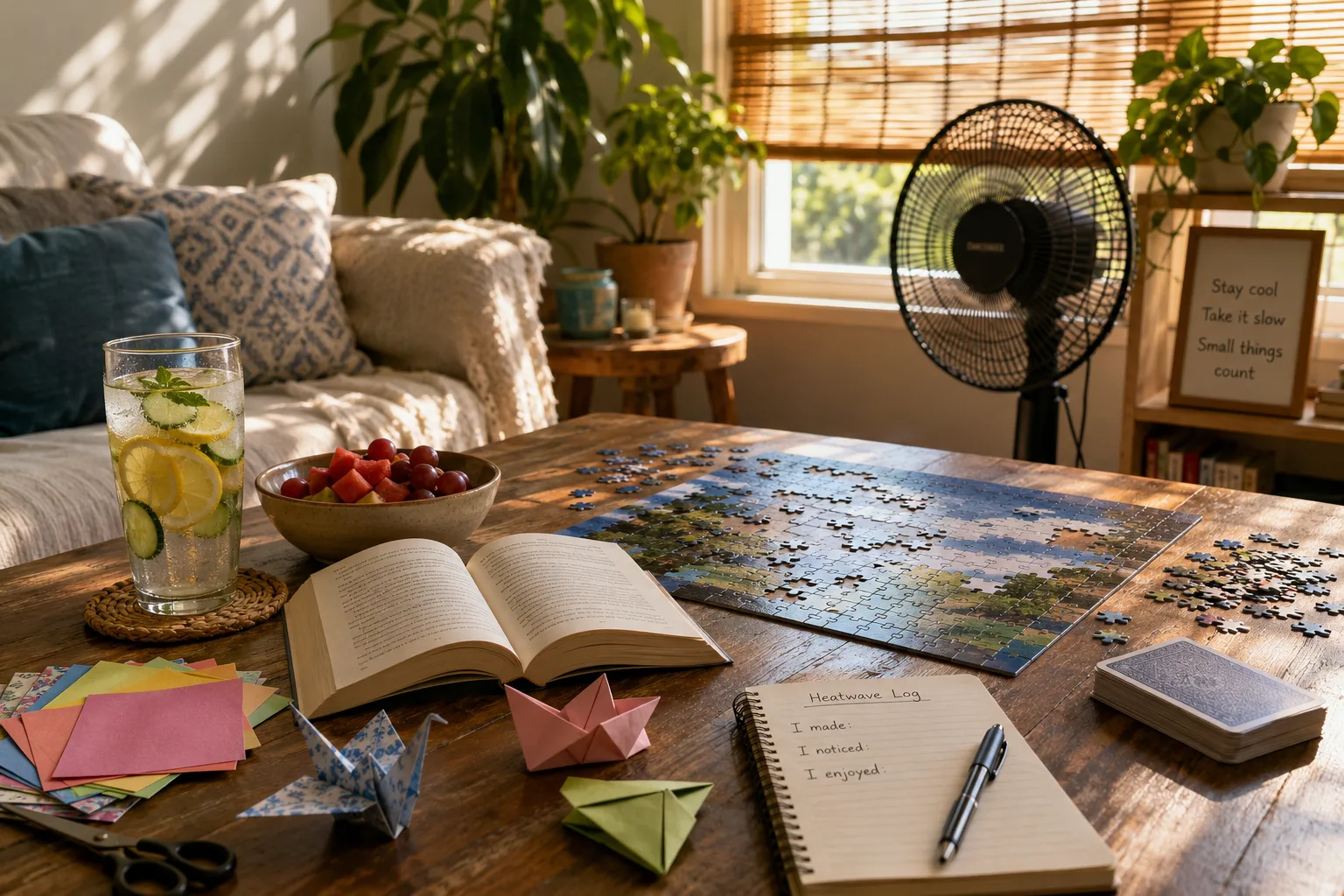
A heatwave is not the moment to become extremely productive.
The room is warm, sleep was questionable, and every task appears to require more movement than the human body was designed to provide in July. You could spend the day scrolling, but that usually leaves you hot, restless, and somehow tired from watching other people have better summers.
The better plan is smaller.
Make the home as comfortable as you reasonably can. Use the cooler hours for anything that requires movement. During the hottest part of the day, choose screen-free activities that can be done slowly, sitting down, and without generating more heat.
This guide offers a ready-made plan for what to do at home during a heatwave, including practical cooling steps, a proper no-cook meal, low-energy activities, and a quiet evening reset.
The objective is not to defeat the weather. It is to remain safe, reasonably comfortable, and present enough that the day does not disappear into your phone.
Start by making one room easier to live in
Before choosing an activity, reduce the amount of heat entering the home.
Official hot-weather guidance recommends shading sun-facing windows during the day, limiting unnecessary heat from electrical devices, and using cooler night air when the outside temperature drops below the temperature indoors. Keep windows closed when the air outside is hotter, then reopen them later when doing so is safe and useful.
You do not need to cool the entire home equally. Choose the room that stays coolest and make it your base for the hottest hours.
Move a comfortable chair there. Bring water, a book, paper, basic craft materials, or anything else you may want later. Close the door to warmer rooms when that helps, and turn off lights or devices you are not using.
This is not interior design. It is temporary heatwave headquarters.
Drink regularly and keep your body cool. Cold food, regular drinks, cool water on the skin, and avoiding strenuous activity during the hottest part of the day are all part of standard heat-safety advice.
Know when the plan should become a safety response
A quiet day at home is appropriate only when you are coping safely.
Heat exhaustion can include tiredness, dizziness, headache, nausea, heavy sweating, cramps, intense thirst, weakness, or a fast heartbeat. Move to a cooler place, remove unnecessary clothing, cool the skin, and drink fluids. Seek urgent medical help when symptoms are severe, do not improve after cooling, or include confusion, loss of coordination, seizure, or loss of consciousness.
Check on anyone who may be more vulnerable to heat, including older people, infants, people with certain health conditions, and people who live alone. Follow local weather warnings and public-health advice.
Once safety is handled, the rest of the day can remain deliberately undramatic.
Early morning: prepare before the home heats up
The morning is the best time for any task that involves movement, cooking, opening doors, or going outside.
Do not use the cooler hours to begin six projects. Choose one practical task and one preparation task.
Water and protect your plants
Water plants early, move sensitive pots away from direct afternoon sun, and remove only obviously dead leaves. Deep watering is generally more useful than repeatedly wetting the surface, and watering early or later in the evening reduces water loss through evaporation.
Keep the activity light. This is not the day to move large containers, dig a new bed, or discover a sudden interest in landscaping.
The finished result is simple: the plants are watered, the soil has had time to absorb moisture, and you do not need to think about them during the hottest hours.
Prepare a cold meal for later
Make one proper meal before the kitchen becomes hostile.
Choose ingredients that are already cold or need very little preparation. Combine beans, vegetables, herbs, bread, chilled grains, tofu, fruit, yoghurt or plant yoghurt, nuts, hummus, or leftovers that have been stored safely.
A good heatwave meal should be easy to assemble and satisfying enough that you do not spend the afternoon grazing beside an open fridge.
Try cold noodles with cucumber and dressing, beans with tomatoes and herbs, a large sandwich with vegetables and a spread, or fruit with yoghurt and oats.
Keep perishable food chilled and follow normal food-safety rules. Hot weather is not a special exemption for leaving lunch on the counter until evening.
Complete one task that removes heat or friction
Take out the rubbish, run the dishwasher if necessary before the hottest part of the day, refill water bottles, or clear one shelf in the fridge so cold food is easier to find.
Pick only one.
A heatwave task should make the next few hours easier. It should not reveal a wider household transformation opportunity.
Late morning: do one gentle activity with a clear result
Once the practical preparation is finished, choose a small activity you can complete before midday.
The best heatwave activities do not require vigorous movement, specialist equipment, or appliances that warm the room.
Make a pressed-leaf bookmark
Collect a few fallen leaves or small flowers during the cooler morning, where collecting is allowed. Place them between sheets of plain paper inside a heavy book.
You will not finish the drying process today, but you can cut a simple bookmark shape from card and decide how the pressed pieces will be arranged later.
The activity gives the morning a visible result without requiring much energy. It also turns the heatwave into part of a seasonal memory rather than a day defined only by discomfort.
Repair one lightweight item
Choose a loose button, small tear, book cover, reusable bag, or another object that can be repaired while sitting down.
Keep the task small enough to finish in 15 or 20 minutes. Avoid heavy tools, solvents, sanding, or anything that requires protective equipment in a poorly ventilated room.
The result should be boringly useful. One object works again. The heat remains outside the scope of the project.
Draw the morning shadow
Place a simple object near a patch of indirect light and trace or sketch the shadow it creates.
Return to the same place later and notice how the shape or position has changed. You can use pencil, pen, or any paper available.
This is one of the easiest screen-free activities for hot days because the weather provides the subject. You are not trying to produce impressive art. You are recording how the day moves through the room.
For another low-effort activity that produces a clear result, pick a Done IRL mission before settling in for the hottest hours.
Midday: stop trying to win against the temperature
During the hottest part of the day, reduce activity rather than trying to maintain your normal pace.
Public-health guidance commonly recommends staying out of strong sun and avoiding strenuous activity during peak heat. The exact hottest hours vary by location, so follow local warnings and pay attention to indoor conditions.
Move to your coolest available room. Eat the meal you prepared. Drink regularly. Cool your skin with water when needed.
Then choose one low-energy activity, not five.
Option one: Sort a small set of printed photos
Do not attempt to organise the entire visual history of your family.
Choose one envelope, one old album, or 20 loose photographs. Put them in rough date order, identify any people or places you recognise, and write missing details lightly on the back where appropriate.
Select three photographs that bring back a clear memory and place them somewhere visible for the day.
Photo sorting is especially suitable during a heatwave because it requires very little movement but still produces a sense of completion. A small group of anonymous images becomes a story again.
Option two: Create a collage from paper already at home
Use old packaging, leaflets, maps, coloured envelopes, or magazines you no longer need.
Choose one simple theme: cold colours, summer objects, shade, water, or places you would rather be.
Tear or cut five to ten pieces, arrange them on one sheet, and glue them down. Stop when the page feels complete enough.
Collage is useful when it is too hot to generate an original idea. The images already exist. Your job is only to choose and combine them.
Option three: Make a heatwave observation page
Divide a sheet of paper into four sections: morning, midday, afternoon, and evening.
Record one detail in each section. You might note the light, sounds, temperature, position of shade, condition of plants, or behaviour of birds and insects.
The page can include words, small sketches, or a simple colour mark.
This turns the day into something observed rather than merely endured. It also creates a memory marker for a period that might otherwise blur into several identical hot afternoons.
Option four: Play a quiet game
Choose cards, dominoes, a board game, a paper word game, or a puzzle you already own.
When you are alone, try patience, a crossword, a logic puzzle, or making your own word-search grid for someone else.
The point is to give your attention a contained problem that ends. You are not consuming an infinite stream designed to replace every quiet second.
A game occupies the mind without requiring the body to perform unnecessary summer heroics.
Option five: Read somewhere unusual
Move a chair, cushion, or folded blanket to the coolest safe part of the home.
Read a short story, magazine, comic, essay, or one chapter of a book. Choose something that can reach a natural stopping point rather than assigning yourself a literary endurance event.
Changing the reading location helps the activity feel separate from ordinary downtime. The hallway floor may not be glamorous, but if it is five degrees cooler, it has won the room-ranking process.
Take real rest, not only content breaks
Heat can make sleep worse, increase fatigue, and reduce patience. Rest may be the most appropriate activity.
Lie down, close your eyes, or sit near the coolest available airflow for 20 minutes. Do not replace work with videos about rest.
You do not need to meditate correctly. Let your body be still and your mind remain unproductive.
A screen-free rest block has a clear beginning and ending. Set an alarm when necessary, keep water nearby, and stop treating inactivity as a failure.
The weather has already cancelled the performance review.
Late afternoon: make one cold thing
When attention starts to fade, make something simple that improves the next part of the day.
Prepare flavoured water
Add sliced citrus, cucumber, berries, or herbs to cold water when available. Let it chill and drink it over the next few hours.
This is not a detox programme. It is water with objects in it.
The small preparation can make regular drinking more appealing without requiring sugar, alcohol, or another trip to a shop.
Make fruit ice
Place small pieces of fruit or herbs into an ice tray, add water, and freeze.
Use the cubes later in water or place them in a bowl as a visual object while they melt. Do not give large or hard ice pieces to young children, and do not treat ice as a replacement for drinking fluids.
The result is modest, cold, and finished. Perfect heatwave project management.
Assemble a cold cloth kit
Dampen two clean cloths with cool water, wring them out, and keep them in a sealed container in the fridge.
Use them on the neck, wrists, or face when you need quick relief. Do not apply frozen material directly to the skin.
This is less an artistic activity and more a favour for your future overheated self, who will be unusually grateful.
Evening: reopen the home when conditions improve
When the outside air becomes cooler than the air indoors, reopen windows where safe and create airflow through the home. Official guidance recommends using cooler night air to release heat that accumulated during the day.
Do not assume evening is automatically safe for strenuous exercise. Check local conditions and notice how your body feels.
If it is comfortable, choose one gentle closing activity.
Listen to one album from beginning to end
Choose one album before you begin, then put the screen away.
Sit or lie down in the coolest room and listen from the first track to the last without cleaning, messaging, or looking up information about the artist.
A complete album gives the evening a clear shape. It is long enough to feel like an experience, but contained enough that the night does not dissolve into endless background content.
Make one small paper object
Use one sheet of paper to make something simple: a folded fan, bookmark, paper box, envelope, or tiny eight-page booklet.
Keep the project basic and finishable in one sitting. The goal is not technical perfection. It is to give your hands a quiet task while the home cools down.
Leave the finished object somewhere visible. A small physical result helps the day feel complete.
Review the day in three lines
Before returning to your phone, write:
The hottest part was: one moment or place.
The best part was: one activity, meal, or detail.
Tomorrow I will: one practical adjustment.
A short note helps the day remain distinct. It also gives you useful information if the heat continues.
A complete screen-free heatwave plan
When you do not want to choose, use this version.
In the morning, shade the home, prepare water and a cold meal, water plants, and complete one light practical task.
Before midday, repair one small item or record the morning shadows.
During peak heat, stay in the coolest available room, eat, drink, rest, and choose one seated activity such as collage, photo sorting, reading, or cards.
In the late afternoon, prepare flavoured water, fruit ice, or chilled cloths.
When conditions become cooler and safe, ventilate the home, listen to one full album, or make a small paper object. Finish by writing three lines about the day.
That is enough structure to make the day feel lived without pretending the heat is an opportunity for radical self-improvement.
What not to do during a heatwave
Avoid strenuous cleaning, intense exercise, long cooking sessions, or projects that create extra heat and require closed protective clothing.
Do not use the hottest hours for furniture restoration, deep cleaning, balcony reorganising, or proving that you remain capable of functioning normally.
Be cautious with internet cooling hacks. Do not apply ice directly to skin, leave candles or electrical devices unattended, block essential ventilation, or rely on a fan to make a dangerously hot room safe.
When the home remains too hot, official guidance may recommend spending time in a cooler public place when available and safe. Follow local heat-health advice.
The best activity may be leaving the activity list entirely and moving somewhere cooler.
Frequently asked questions
What can I do at home during a heatwave?
Start by shading sun-facing windows, reducing unnecessary heat from appliances, preparing water, and moving to the coolest room available.
During the hottest hours, choose low-energy activities such as reading, cards, collage, sorting a small set of photographs, simple mending, or keeping a heatwave observation page.
What are good indoor activities for hot weather?
Good indoor activities for hot weather can be completed while sitting down and do not generate extra heat.
Try paper collage, drawing shadows, visible mending, card games, reading, flower pressing, journalling, or organising a very small collection.
How can I stay cool at home without air conditioning?
Shade windows during direct sun, reduce unnecessary heat from electrical devices, keep hotter outside air out during the day, and ventilate when the outside air becomes cooler.
Drink regularly, use cool water on the skin, wear light clothing, and move to the coolest room. Follow local official guidance, especially during extreme heat.
Should I open the windows during a heatwave?
Open windows when the outside air is cooler than the air inside and doing so is safe. Keep them closed when outside air is hotter, particularly on the sun-facing side of the home.
Conditions vary by building, time of day, and location, so compare indoor and outdoor temperatures rather than following one rule all day.
What can I eat when it is too hot to cook?
Try cold meals built from safely stored ingredients: beans and vegetables, chilled grains, sandwiches, hummus and bread, fruit with yoghurt or plant yoghurt, or cold noodles with cucumber and dressing.
Prepare food during cooler hours and return perishable ingredients to the fridge promptly.
Is it safe to exercise during a heatwave?
Avoid strenuous activity during the hottest part of the day and follow local heat warnings. When you do move, choose cooler hours, reduce intensity, drink regularly, and stop when you feel unwell.
A short gentle walk in safe evening conditions may be enough.
Let the day remain small
A heatwave is not wasted time because you did less.
You kept the home as cool as possible. You fed yourself. You completed one small thing. You rested when the weather demanded it and noticed the day instead of losing all of it to a screen.
That is a complete day.
For another low-effort, screen-free activity matched to the time and energy you actually have, try the Done IRL mission picker.
Choose something small.
The temperature is already doing enough.
