8 Creative Hobbies for Adults Who Think They Are Not Creative
You do not need artistic talent, expensive equipment, or plans to sell anything. These creative hobbies are simply enjoyable ways to give your attention somewhere else to go.
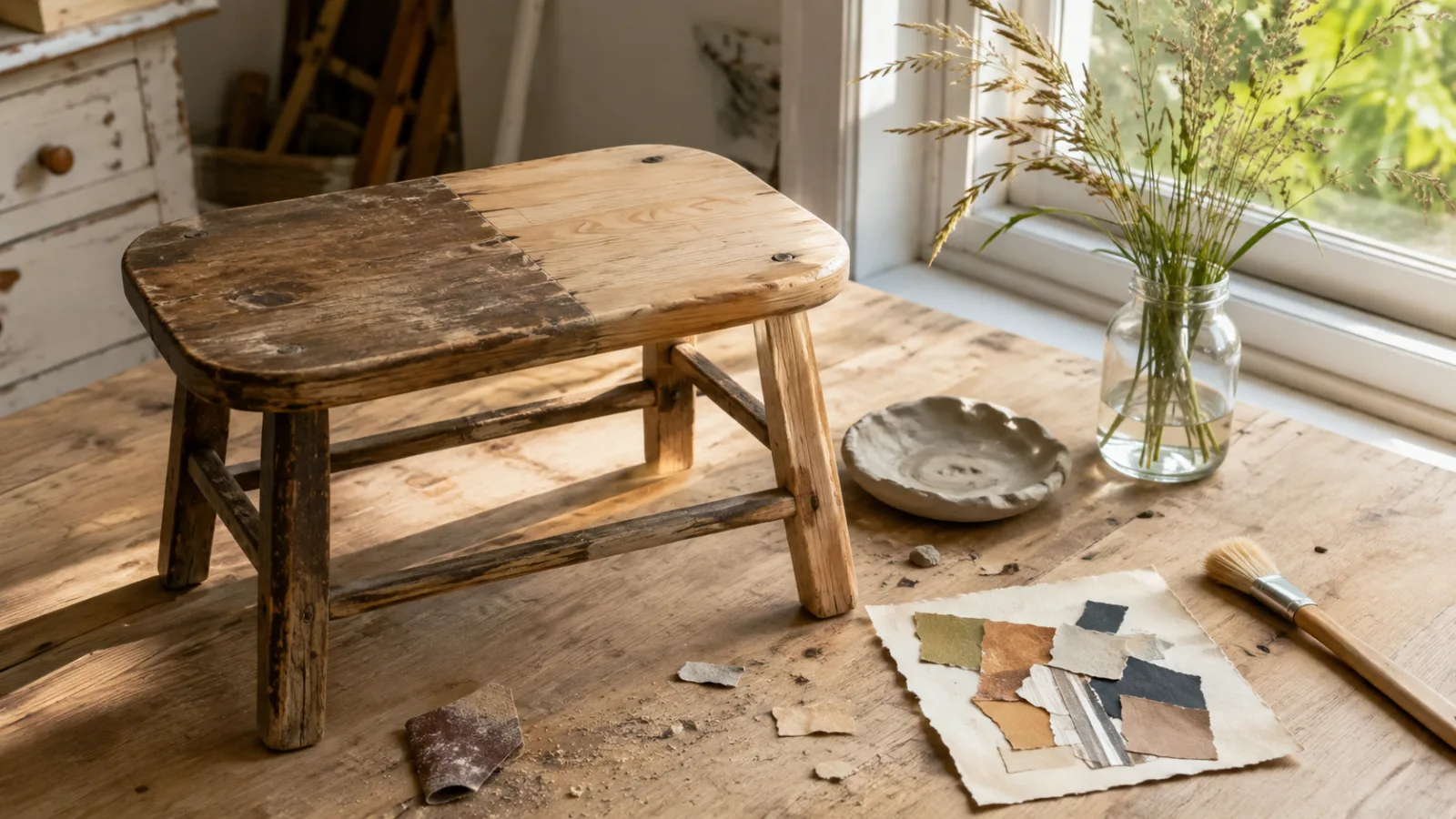
Some people say they are not creative with the same confidence they use to say they cannot digest dairy.
It sounds settled. Medical, almost.
Usually, they mean something else.
They cannot draw realistically. They once made a terrible clay bowl. They tried a craft, compared the result with somebody who had been doing it for twelve years, and quietly returned to watching other people make things online.
That does not mean you are not creative.
It means you have confused creativity with being good at art.
A creative hobby does not need to lead anywhere. You do not need to become an artist, develop a recognisable style, open an online shop, or produce things impressive enough to justify the materials.
The hobby can exist for one reason:
It gives your attention somewhere enjoyable to go.
That is enough.
Research has associated participation in arts and crafts with greater happiness, life satisfaction, and a stronger sense that life is worthwhile. The value appears to come from taking part, not from producing professional-quality work.
Below are eight approachable creative hobbies for adults who do not think of themselves as artistic. Each one includes a first action you can complete in 15 minutes, before your brain has time to create a procurement plan.
You do not need to feel creative before you begin
Creativity is often treated like a personality type.
Some people are apparently born wearing paint-covered overalls, while everyone else is expected to remain in spreadsheets.
In reality, creative activities are usually made from small decisions:
Which colour goes here?
What happens when I move this?
Can I make the repair visible instead of hiding it?
Would these shapes look better further apart?
Can this lump of clay become something that holds keys?
You do not need a grand idea. You need a material, a simple constraint, and permission to make something slightly strange.
The easiest hobbies for non-creative people are simple to start, give your hands a clear job, and produce a visible result before you lose interest.
They also allow bad first attempts.
That part matters.
A hobby is one of the few places where you can be mediocre without creating a performance-improvement plan about it.
1. Collage: create by choosing, not drawing
Collage is one of the easiest creative hobbies because the raw material already exists.
You are not starting with a blank page and being asked to invent beauty from nothing. You are selecting, cutting, moving, and combining.
Use old magazines, maps, packaging, leaflets, photographs you no longer need, or coloured paper headed for recycling.
Choose a loose theme such as blue, strange faces, places you would like to visit, calm objects, or images that make no sense together.
Then cut first and interpret later.
Collage works well when drawing feels intimidating. You still make decisions about colour, shape, contrast, and composition, but you do not have to create every element yourself.
The result can become a card, bookmark, framed page, notebook cover, or something that remains in a drawer because making it was the enjoyable part.
Both outcomes count.
Your first 15-minute action: Find one sheet of paper and five images from old packaging or printed material. Tear or cut them out, move them around until the arrangement feels interesting, then glue them down.
Do not spend the full 15 minutes searching for the perfect image. The slightly wrong image is often the useful one.
2. Visible mending: make the repair part of the design
Traditional mending tries to make damage disappear.
Visible mending does the opposite. It uses contrasting thread, patches, repeated stitches, or deliberately obvious repairs to turn the damaged area into part of the object.
This makes it a forgiving entry into crafts for adults. Your stitches do not need to be invisible, perfectly straight, or approved by somebody’s grandmother.
Start with a low-risk item: an old pair of jeans, a reusable bag, a sock, or something you already wear only at home.
Use thread you have. A patch can come from another worn-out item.
The creative decision is simple. Instead of asking, “How do I hide this?” ask, “How can I make this repair look intentional?”
You finish with something that is useful again and visibly changed by your work.
That is a good return on 20 centimetres of thread.
Your first 15-minute action: Choose one small hole or worn area. Cut a patch slightly larger than the damage, hold it in place, and make a line of simple running stitches around the edge.
Stop when the patch is secure. Decoration can happen later, assuming the fashion industry survives your first attempt.
3. Simple drawing: look carefully instead of trying to impress
Drawing becomes intimidating when the goal is to make the object look correct.
Remove that goal.
Simple drawing can be an observation exercise rather than a test of talent. Choose one object and spend more time looking at it than judging the page.
Try drawing without lifting the pen, using only straight lines, drawing the empty space around the object, or using your non-dominant hand.
These constraints make imperfect results expected.
They also give your brain a specific problem to solve, which is much more useful than being told to express yourself.
Draw a key, spoon, lamp, remote control, crumpled paper bag, or whatever is close enough that standing up would create unnecessary friction.
The drawing does not need to go on a wall. The result is that you noticed an ordinary object more carefully than usual.
Your first 15-minute action: Put one object in front of you. Draw it three times for five minutes each: once without lifting the pen, once using only straight lines, and once without looking down at the page.
Explain nothing. Let the three drawings be evidence that you looked.
4. Air-dry clay: make something useful and slightly wonky
Clay is direct.
You press it, roll it, flatten it, pinch it, and quickly discover that the material has opinions.
You do not need a pottery wheel or kiln to begin. Air-dry clay can be shaped at home and left to harden. Follow the product instructions, and do not use the finished piece for food unless the material and finish are specifically certified for it.
Start with something small: a key dish, decorative tile, bead, plant label, or tiny object whose purpose is mostly being tiny.
Clay is one of the best screen-free creative activities because it occupies both hands. It also gives immediate feedback. Push too hard and the form changes. Add a little water and the surface softens. Leave a fingerprint and it becomes part of the evidence.
You are not producing a collection.
You are making one object from one lump.
Your first 15-minute action: Roll a small piece of clay into a ball, press your thumb into the centre, and slowly pinch the sides to create a shallow dish.
Smooth one area and leave another visibly handmade. Put it somewhere safe to dry.
Congratulations, you now manufacture bowls at an extremely limited scale.
5. Flower arranging: work with shape, height, and space
Flower arranging sounds formal until you remove the expensive flowers and rules.
Use a small supermarket bunch, garden cuttings where permitted, grasses, herbs, fallen branches, or interesting leaves.
The activity is mostly observation.
Which stem is tallest?
Where is the arrangement crowded?
Does one unexpected branch make everything more interesting?
Use a jar, bottle, bowl, or any watertight container you already own.
This is not about creating a wedding centrepiece. It is about changing the way a few natural materials occupy a space.
The result is temporary. It will change, wilt, and eventually be composted or discarded.
That can make experimenting easier. You are not creating an heirloom that future generations must respectfully store.
Your first 15-minute action: Choose five to seven stems. Trim them to three different heights, remove leaves that would sit below the water, and arrange them in a reused container.
Move one stem at a time until there is space between the shapes. Stop before you begin giving every leaf a performance review.
6. Bread shaping: make something creative that becomes lunch
Bread making is often presented as a science project involving hydration percentages and somebody online who is disappointed in your starter.
It can also be simple.
Use a familiar dough, ready-made pizza dough, or a basic recipe you already trust. The creative part is shaping it.
Make knots, rolls, rings, twists, flatbreads, or one larger loaf with simple cuts across the top. Add seeds or herbs when they are already available.
The result does not need to resemble a bakery window. Dough expands, sticks, twists, and changes in the oven. That unpredictability is part of the activity.
Bread shaping sits somewhere between cooking and making. Your hands create a form, heat transforms it, and the result gets eaten rather than stored in a cupboard forever.
This may be the ideal fate for early art.
Your first 15-minute action: Divide a piece of dough into three parts. Shape one into a knot, one into a small round roll, and one into a twisted strip.
Place them on a tray and notice which movement feels easiest.
Even when all three become unusual bread lumps, they remain bread.
7. Furniture restoration: improve one small part
Furniture restoration sounds like a workshop, protective goggles, and a person who knows the names of twelve types of wood joint.
Your first project can be much smaller.
Choose an old stool, wooden box, picture frame, drawer, chair, or side table that is already yours and not especially valuable.
Do not begin by stripping the whole object.
Clean one area. Tighten one loose part. Remove one sticker. Test a small patch with suitable sandpaper.
Research the material before applying oils, paint, solvents, or chemical cleaners, and use the right protective equipment.
Restoration is creative because you decide what to preserve, what to remove, and how much change the object needs.
It also gives you a strong before-and-after result. The work is physical, visible, and contained.
Your first 15-minute action: Pick one small wooden object. Photograph its current condition for yourself, remove surface dirt with a suitable cloth, tighten any obvious loose screw, and identify one area to improve next.
Do not buy six restoration products yet. First confirm that you enjoy touching old furniture voluntarily.
8. Photography as observation, not posting
Photography becomes stressful when every image is treated as possible content.
Remove the audience.
Use your phone or any camera you already have, but do not post the photographs. Do not edit them during the activity. Do not check whether somebody else has photographed the same thing better.
Choose one observation prompt:
Reflections, shadows, repeated colours, signs of repair, circles, objects left behind, or evidence that the season is changing.
Then take a short walk or move through your home looking only for that prompt.
Photography becomes creative when it changes what you notice. The picture is not the only result. The selection is part of the work.
You decide where to stand, what to exclude, when to wait, and which detail deserves attention.
That makes photography one of the most accessible artistic hobbies available. You can begin with equipment already in your pocket and use it to notice more instead of consume more.
Your first 15-minute action: Choose one theme and take exactly ten photographs. When the time ends, review them once and select one favourite.
Keep it. Post nothing.
The activity is complete.
How to choose the right creative hobby
Do not ask which hobby best represents your hidden creative identity.
Ask what kind of action sounds satisfying today.
Choose collage when you want to select and arrange.
Choose mending when you want a practical result.
Choose drawing when you want to notice an object.
Choose clay when you need to use both hands.
Choose flowers when you want to work with natural shapes.
Choose bread when you want creativity to become lunch.
Choose restoration when you want a visible before and after.
Choose photography when you want to look at familiar places differently.
You can also choose based on what is already available.
The hobby that begins tonight with ordinary materials is usually more useful than the perfect hobby waiting behind a large equipment order.
For another small making activity, browse the Done IRL creative missions.
Do not turn the hobby into another performance system
A new hobby can survive approximately six minutes before the internet suggests monetising it.
You make one clay dish and start researching packaging.
You draw for a week and wonder whether you need a dedicated account.
You restore one stool and imagine a side business with regional delivery.
This is optional.
A hobby is allowed to remain private, inefficient, and financially useless.
You do not need a recognisable style, professional materials, a posting schedule, a measurable improvement target, or a plan to sell the result.
You may improve because practice naturally changes what you notice and what your hands can do. Improvement does not need to be the price of admission.
The purpose is to have a distracting activity you enjoy. Something that interrupts repetitive thoughts and gives you a process to follow.
Creative activities can provide focus, pleasure, and a sense of completion even when the final object is awkward. Research on crafting often highlights engagement, relaxation, flow, and enjoyment rather than artistic achievement.
Make the thing.
Notice how the process feels.
Decide whether you would like to do it again.
That is the entire quarterly review.
Keep the first project deliberately small
The first project should fit inside one session.
One collage page. One repaired hole. Three short drawings. One clay dish. One arrangement. Three shaped rolls. One cleaned furniture section. Ten photographs.
A small project gives you a realistic chance of reaching the part that makes hobbies satisfying: completion.
Large projects create open loops. They require storage, planning, more materials, and a future version of you who remains equally enthusiastic.
That person has a mixed record.
Finish something small first.
Then earn the right to create a larger mess.
Frequently asked questions
What are good creative hobbies for adults who are not artistic?
Collage, visible mending, simple drawing exercises, air-dry clay, flower arranging, bread shaping, small restoration projects, and observation photography are approachable options.
They rely on simple decisions and physical actions rather than advanced artistic skills.
What is the easiest creative hobby to start?
Collage and observation photography have particularly low entry barriers because you can use materials and equipment you already have.
Simple drawing is equally accessible when you use constraints instead of aiming for realism.
Can I have a creative hobby if I am bad at art?
Yes.
A hobby is something you do because you enjoy the process. It does not require professional skill, public approval, or a result that other people would buy.
Being a beginner is not evidence that you chose the wrong hobby.
What are some screen-free creative activities?
Visible mending, clay shaping, flower arranging, bread shaping, furniture restoration, paper collage, and drawing can all be completed without a screen.
A screen may help with initial instructions, but it does not need to remain part of the activity.
How do I stop comparing my work with other people’s work?
Avoid posting early projects and reduce the amount of tutorial content you consume while working.
Compare the result with what existed before you started. A blank page became a collage. A hole became a repair. A lump became a dish.
That is enough evidence of progress.
Do creative hobbies need to produce something useful?
No.
A practical result can be satisfying, but usefulness is not required. A strange drawing, temporary arrangement, or private set of photographs can still provide focus, enjoyment, and a clear break from routine.
Make one slightly imperfect thing
You do not need to discover whether you are secretly creative.
Choose one material.
Give it 15 minutes.
Tear five images. Repair one hole. Draw one object badly. Shape one lump of clay. Arrange five stems. Twist one piece of dough. Clean one wooden surface. Photograph ten shadows.
Then look at what exists because you spent time making rather than consuming.
It may be useful. It may be beautiful. It may be neither.
The purpose was not to become an artist.
The purpose was to give your attention somewhere enjoyable to go.
For a small activity you can start with the time and materials you already have, try the Done IRL mission picker.
Make something nobody asked for.
Keep it anyway.
