10 Cheap Hobbies for Adults That Do Not Require Much Equipment
You do not need an expensive starter kit to begin a new hobby. These ten practical hobbies cost little, require minimal equipment, and produce something real.
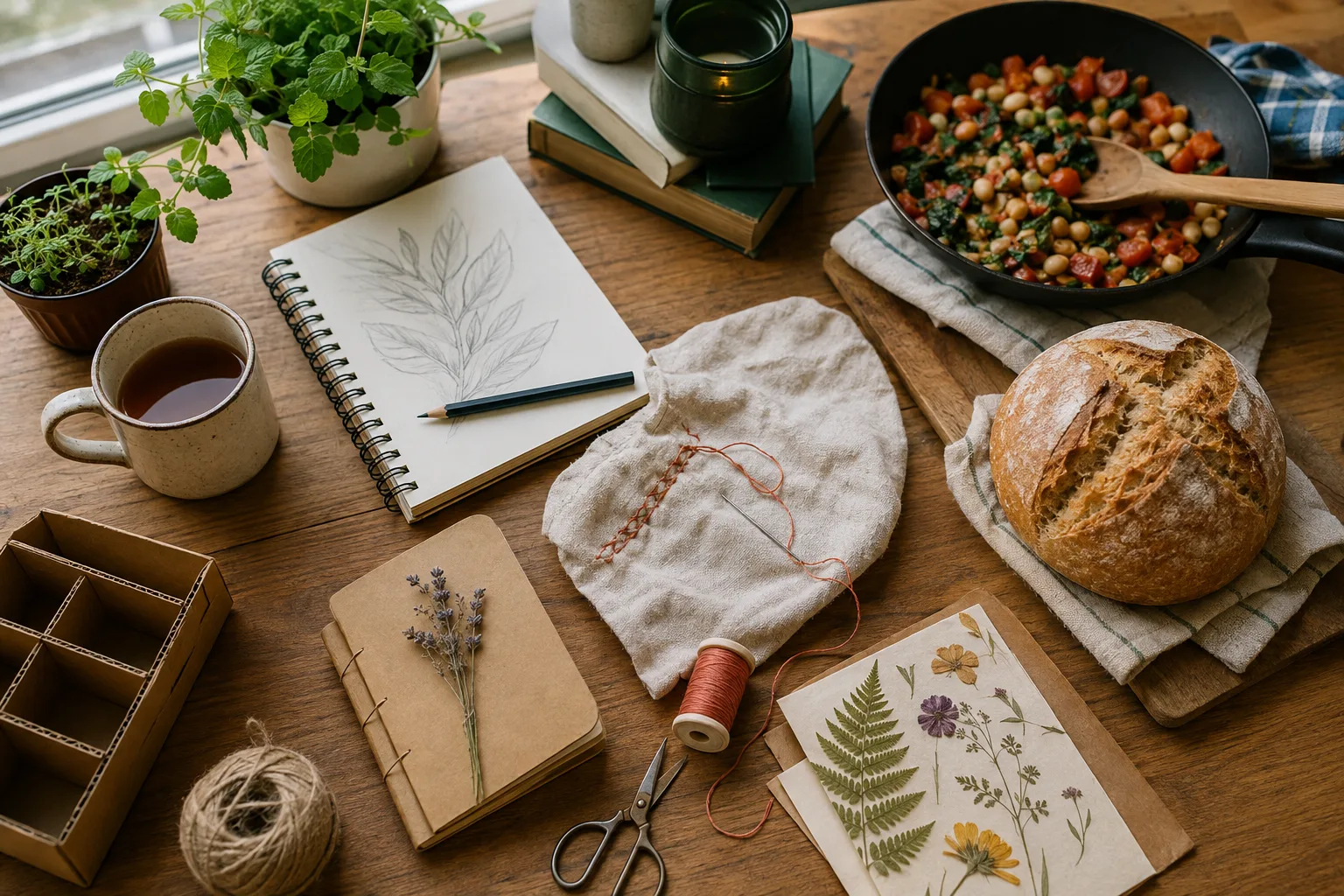
Finding a new hobby should not require a financial strategy, twelve-piece starter kit, and three weeks of product research.
A hobby can begin with a pencil, an old shirt, a saucepan, or the shoes you already own.
The best cheap hobbies are easy to test before you spend money on them. They give you something interesting to do without forcing you to transform your home into a specialist workshop.
This guide focuses on practical cheap hobbies for adults that:
- Cost little or nothing to start
- Need very little equipment
- Can be tested in 30 minutes
- Produce a visible result
- Work without subscriptions or complicated setup
The prices below are rough estimates in euros. Local prices will vary, and many of these hobbies are free when you use things already available at home.
Cheap hobbies ideas
1. Mission-based walking
Walking is one of the easiest free hobbies to begin because you probably already own everything you need.
The hobby becomes more interesting when you give each walk a small mission. Instead of walking the same route while thinking about work, choose something specific to notice or complete.
You could:
- Find five unusual front doors
- Walk every street in your neighbourhood
- Locate three public benches
- Notice ten different plants
- Follow a road you have never taken
- Walk to a local landmark
- Collect fallen leaves for a future project
This turns an ordinary walk into exploration without requiring an app, tracker, or performance goal.
Approximate starting cost: €0
Minimum equipment: Comfortable shoes and suitable clothing.
Your first 30-minute action: Choose a simple route around your neighbourhood. Walk without headphones and look for five details you have never noticed before.
What the finished result looks like: A completed route and a short handwritten list of what you found.
The result is not a step count. You went somewhere, noticed something, and returned.
2. Drawing everyday objects
You do not need paints, professional pencils, or artistic talent to start drawing.
A pencil and the back of an old envelope are enough.
The easiest way to begin is to draw ordinary objects instead of trying to invent a dramatic original composition. Choose a mug, shoe, houseplant, spoon, key, or lamp.
Drawing becomes a hobby when you start looking more carefully at the physical world around you.
You can later experiment with:
- Continuous-line drawing
- Small daily sketches
- Room layouts
- Plant studies
- Illustrated recipes
- Simple comics
- Drawings of local buildings
Do not buy a complete art set before you have filled several pages with an ordinary pencil.
Approximate starting cost: €0 to €5
Minimum equipment: A pencil or pen and any paper.
Your first 30-minute action: Place one household object in front of you. Spend 20 minutes drawing it, then use the remaining ten minutes to add shadows and small details.
What the finished result looks like: One complete drawing of an object you can recognise, even when the proportions are slightly questionable.
This is one of the simplest hobbies that do not require equipment beyond materials most homes already contain.
3. Cooking one signature dish
Cooking becomes a hobby when you move beyond assembling food and start improving one dish deliberately.
Choose something affordable that you would genuinely like to eat more than once. It might be soup, curry, pasta sauce, dumplings, roasted vegetables, risotto, chilli, or a particularly serious sandwich.
Make the same dish several times. Change one thing during each attempt:
- Adjust the seasoning
- Try another vegetable
- Improve the texture
- Change the cooking time
- Make the presentation better
- Reduce waste
- Create your own written recipe
You do not need a collection of specialist kitchen gadgets. A knife, chopping board, pan, and wooden spoon can take you surprisingly far.
Approximate starting cost: €3 to €10, depending on the ingredients.
Minimum equipment: One pan or pot, a knife, a chopping board, and basic ingredients.
Your first 30-minute action: Choose one simple dish. Gather the ingredients, prepare them, and start cooking without watching five competing recipe videos.
What the finished result looks like: A complete meal that can be eaten, shared, or packed for tomorrow.
Among all hobbies to do at home, cooking has an unusually practical final product. You get dinner.
4. Baking bread or flatbread
Bread looks like an advanced hobby because the internet has given everyone strong opinions about fermentation schedules.
It does not need to begin that way.
Start with a basic flatbread, soda bread, focaccia, or simple yeast loaf. Flour, water, salt, and a raising agent are enough for many beginner recipes.
The process is physical and easy to understand. You mix ingredients, work the dough, shape it, apply heat, and produce something completely different.
Early loaves may be uneven. They remain bread.
Approximate starting cost: €2 to €5
Minimum equipment: Flour, water, salt, a bowl, a tray or pan, and access to an oven or stovetop.
Your first 30-minute action: Mix a simple dough, knead or fold it, and shape it. Depending on the recipe, either cook it immediately or leave it to rise.
What the finished result looks like: A loaf, several rolls, or a stack of warm flatbreads you can tear, toast, or serve with a meal.
This is one of the most satisfying inexpensive hobbies because basic ingredients produce an obvious transformation.
5. Growing herbs or salad leaves
You do not need a garden to grow something edible.
A windowsill, balcony, doorstep, or other bright area can hold one pot. Start with herbs or salad leaves that you already use, such as basil, parsley, chives, mint, rocket, or lettuce.
Use a recycled food container when appropriate. Add drainage holes, fill it with soil, and plant a small number of seeds.
The hobby is not only planting. It includes checking the soil, observing changes, moving the pot, thinning seedlings, harvesting leaves, and learning what keeps the plant alive.
There will occasionally be a corporate restructuring caused by aphids.
Approximate starting cost: €3 to €10
Minimum equipment: A small container, soil, seeds or a young plant, water, and a reasonably bright location.
Your first 30-minute action: Prepare one container, add soil, plant the seeds according to the packet instructions, water them, and place the pot somewhere suitable.
What the finished result looks like: One labelled growing pot with seeds planted and the soil watered.
After several weeks, the result becomes something you can cut and add to a meal.
6. Visible mending
A loose button or small tear does not need to become a permanent feature of your wardrobe.
Visible mending turns repairs into part of the design. Instead of trying to make every stitch invisible, you can use contrasting thread or a patch that makes the repair deliberate.
Start with something low-risk:
- A loose button
- A small hole in a sock
- A torn pocket seam
- A loose hem
- A small hole in a T-shirt
- A worn section of a reusable bag
Basic sewing is one of the most useful low-cost hobbies because every new technique helps you keep something in use for longer.
Approximate starting cost: €3 to €8
Minimum equipment: A needle, thread, scissors, and an item that needs repairing. A scrap of fabric may also be useful.
Your first 30-minute action: Choose one damaged item. Thread the needle, make the smallest necessary repair, knot the thread securely, and trim the loose ends.
What the finished result looks like: An item that is wearable or usable again, with a repair that is secure rather than perfect.
You have not launched a fashion label. You have simply defeated one hole.
7. Restoring a small household object
Restoration does not have to begin with antique furniture or a workshop full of power tools.
Choose one small object that is dirty, dull, loose, scratched, rusty, or neglected. Good first projects include:
- A wooden spoon
- A plant pot
- A picture frame
- A small box
- A drawer handle
- A garden tool
- A wooden stool
- A metal container
- An old tray
First identify the smallest useful improvement. Clean it, tighten it, sand one rough area, remove surface rust, or apply an appropriate finish.
Research how to handle the material safely before using chemical cleaners, oils, paint, or abrasive products.
Approximate starting cost: €3 to €15
Minimum equipment: A cloth and whatever the specific job requires, such as a screwdriver, sandpaper, brush, oil, or paint.
Your first 30-minute action: Clean the object thoroughly. Remove loose dirt, inspect the damage, tighten anything loose, and decide on one next improvement.
What the finished result looks like: A cleaner, safer, or more attractive object that is ready to return to use.
This hobby gives you a clear before-and-after result without requiring you to buy something new.
8. Making useful things from cardboard
Cardboard is free, widely available, and structurally more useful than it receives credit for.
Save clean boxes from food packaging or deliveries. Use them to make simple objects such as:
- Drawer dividers
- Desk organisers
- Seedling labels
- Magazine holders
- Storage trays
- Gift boxes
- Cable organisers
- Templates for sewing projects
Start with an item that solves a small problem. Do not begin by constructing a full architectural model of your home.
Measure the space, cut the cardboard carefully, and join the pieces with glue or tape. Decorative paper can be added later, but it is not required.
Approximate starting cost: €0 to €5
Minimum equipment: Clean cardboard, a ruler, pencil, scissors or a craft knife, and glue or tape.
Your first 30-minute action: Measure one messy drawer. Cut several strips of cardboard and connect them to create simple compartments.
What the finished result looks like: A working drawer divider that separates small objects and fits the available space.
This is one of the best cheap hobbies for adults who enjoy making things but do not want to invest in tools or materials.
9. Pressing leaves and flowers
Pressed botanical projects combine walking, collecting, arranging, and making.
Collect a small number of fallen leaves or flowers where doing so is permitted. Avoid protected plants, private gardens, and anything you cannot identify safely.
Place each item between clean sheets of paper, then press it inside a heavy book. After it has dried, use it to make:
- A bookmark
- A greeting card
- A framed arrangement
- A gift tag
- A notebook cover
- A seasonal collection
The materials are simple, but the hobby encourages you to notice shape, colour, texture, and seasonal changes.
Approximate starting cost: €0 to €5
Minimum equipment: Leaves or flowers, plain paper, and several heavy books. Glue and card are optional for the final project.
Your first 30-minute action: Take a short walk and collect a few suitable fallen plants. Arrange them between sheets of paper and place them inside a heavy book.
What the finished result looks like: A neat set of botanical pieces positioned for pressing. Later, they become a finished bookmark, card, or picture.
The first stage is complete before the drying process is complete. Hobbies are allowed to have loading screens.
10. Making a simple notebook
A handmade notebook does not require specialist bookbinding equipment.
You can create a small stitched notebook from ordinary printer paper, packaging card, thread, and a needle.
Fold several sheets in half. Add a thicker paper or card cover. Make a few carefully positioned holes along the fold, then stitch the pages together.
Your first attempt may not lie completely flat or resemble something sold in an expensive stationery shop. It will still hold words.
Once you understand the basic structure, you can experiment with:
- Recycled covers
- Different paper sizes
- Coloured thread
- Pockets
- Illustrated covers
- Gardening records
- Recipe notebooks
- Walking journals
Approximate starting cost: €2 to €8
Minimum equipment: Several sheets of paper, thin card, a ruler, needle, thread, and scissors.
Your first 30-minute action: Fold six to ten sheets of paper in half, add a card cover, mark three sewing holes, pierce them carefully, and stitch the notebook together.
What the finished result looks like: One small hand-bound notebook ready for sketches, lists, recipes, observations, or future hobby plans.
This is an inexpensive making hobby with a finished result that can support several other hobbies on this list.
How to choose a cheap hobby you will actually continue
The cheapest hobby is not helpful when you dislike doing it.
Before buying anything, ask four practical questions:
Do I enjoy the actual activity?
Do not choose baking only because you like eating bread. Do not choose restoration only because you like restored furniture.
The process must be at least somewhat enjoyable.
Can I start it in less than ten minutes?
The more setup a hobby requires, the easier it becomes to postpone.
Keep the basic materials together and accessible. Your hobby should not require an archaeological expedition through three cupboards.
Is there a small version of it?
Choose hobbies that can produce a result in one short session.
Draw one object. Mend one sock. Plant one pot. Walk one loop. Make one notebook.
You can expand later.
Can I use what I already own?
Search your home before buying a starter kit. Paper, jars, boxes, fabric scraps, basic tools, pots, and ingredients may already give you everything you need.
Buying hobby equipment and doing a hobby are two separate activities.
Frequently asked questions
What are the cheapest hobbies for adults?
Walking, drawing, visible mending, cardboard making, cooking, and pressing leaves can all be started for very little money.
Walking may be completely free when you already own suitable shoes. Drawing can begin with a pen and scrap paper. Mending requires only a needle and thread for many basic repairs.
What hobbies can I start with no money?
Good free hobbies include mission-based walking, sketching with materials you already own, collecting and pressing fallen leaves, practising basic clothing repairs, and making objects from clean packaging.
The exact cost depends on what is already available at home.
What hobbies do not require much equipment?
Walking, drawing, cooking, mending, growing one plant, paper crafts, and simple notebook making all require minimal equipment.
Start with the smallest possible version before buying specialist materials.
What are good cheap hobbies to do at home?
Some of the best hobbies to do at home include cooking, baking, drawing, visible mending, restoring small objects, growing herbs, cardboard making, and simple bookbinding.
These activities can be completed in limited space and do not require a dedicated hobby room.
How do I avoid spending too much on a new hobby?
Set a small trial budget and complete several projects before upgrading your equipment.
Borrow tools when possible. Use recycled materials. Buy individual supplies rather than large kits. Avoid shopping for an advanced version of a hobby you have not started yet.
Start before you buy anything
You do not need to find the perfect hobby today.
Choose one idea that uses something already in your home. Spend 30 minutes on the first action. Finish one small result.
Then decide whether you want to do it again.
That is a better test than reading another list of cheap hobbies, adding seventeen products to a basket, and returning to scrolling.
For another small activity you can complete with the time and energy you have today, use the Done IRL mission picker.
Your new hobby does not need a business plan. It only needs a first attempt.
